

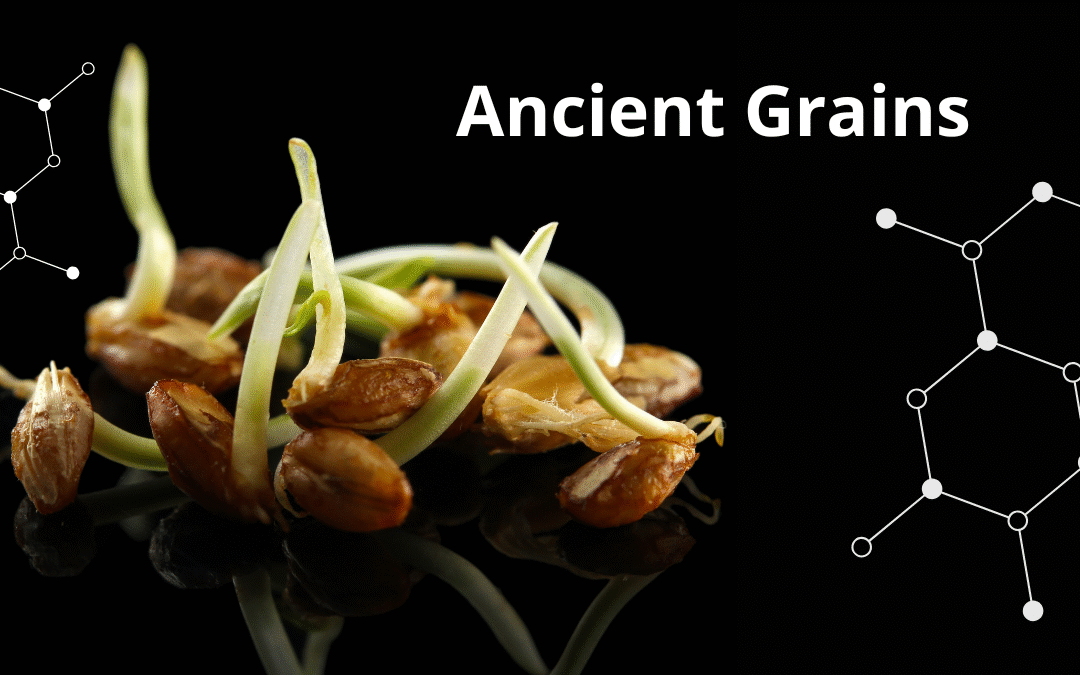
Senatore Cappelli, Verna, Tumminia, Einkorn. Names that just a few years ago were relegated to agronomy textbooks are now dominating the shelves of specialty shops and supermarkets. It’s undeniable: we are living through an ancient grain renaissance.
Driven by the search for a more authentic flavor, a shorter supply chain, and the (often correct) perception of a superior nutritional profile, we buy them full of expectations. Then, we bring them into the kitchen, use them in place of our usual all-purpose flour, and… disaster strikes.
Doughs that don’t build “strength,” that remain sticky, that collapse on themselves. The frustration is immediate, and the blame is placed on the flour: “it’s weak,” “it doesn’t work.”
The error lies in the assumption. We aren’t using a “worse” flour; we are using a different flour. Asking a Senatore Cappelli to behave like a Manitoba (strong bread flour) is like asking a violin to sound like a drum. They have different structures, born for different purposes.
Let’s put the true nature of ancient gluten under the microscope.
FOR THE PASSIONATE HOME BAKER:
For those who bake at home, the shock is tangible. Modern flour creates a smooth, elastic, “nervous” dough. Ancient grain flour often creates a dough that is slack, sticky, and extensible, tearing easily. Why?
- Not All Gluten is the Same: The “Elastic” vs. “Glue” Team
Imagine gluten as a fabric. To weave it, you need two threads:
- Glutenins: These are the “elastic” threads. They provide strength, tenacity, and resistance. They allow the dough to trap gas and rise.
- Gliadins: These are the “extensible” and “sticky” threads (like glue). They give the dough the ability to stretch without tearing.
Modern grains have been selected for decades to have a perfect balance between the two, with a strong component of “elastics” (glutenins) to withstand industrial mixers.
Ancient grains, not having undergone this selection, often have an unbalanced gluten: they have little “elastic strength” (few glutenins) and lots of “glue” (many gliadins).
- What does it mean to knead “more glue than elastic”?
It means the dough will stretch a lot (extensibility) but won’t have the strength to trap gas (tenacity). As soon as you try to “develop the gluten” (knead it vigorously), instead of getting stronger, its fragile network breaks. The result: the dough collapses and “releases” the water it had absorbed, turning into a soup.
- How do you work with a “delicate” dough? Gently.
If you have a precious, ancient fabric, you don’t put it in the washing machine at 90 degrees. Likewise:
- No Stand Mixer (or very little): Forget vigorous kneading. Mechanical force shatters this type of gluten.
- Yes to Stretch & Folds: This is the best technique. You build the structure gently, aligning the few “elastic” threads you have, layer by layer, without stressing them.
- Less Water (at first): These flours, especially if whole grain, absorb water quickly (thanks to the fiber) but their gluten isn’t strong enough to “hold” it. Start with lower hydrations (60-65%) and see how it reacts.
- Short Fermentations: They don’t have the strength to support long cold proofs. The gluten will degrade before the flavor can develop.
The Takeaway: Stop asking these flours to give you strength. Use them for what they can give you: incredible flavor and perfect extensibility (e.g., for thin pan pizzas or focaccias). Adapt your technique to their nature.
THE TECHNICAL DEEP DIVE
For the professional, the difference isn’t a feeling; it’s a precise rheological measurement. The challenge is to adapt the process to an alveograph profile that is completely different from that of modern technical flours.
- Gluten Index and the P/L Ratio
The “strength” (W) of a flour doesn’t tell the whole story. The key metric in ancient grains is the P/L ratio (Tenacity/Extensibility) measured by the Chopin alveograph.
- Modern Grains (for bread-making): Have a balanced P/L (often 0.5 – 0.7). The dough is both tenacious and extensible.
- Ancient Grains (e.g., Senatore Cappelli): Almost always have a very low P/L (e.g., 0.3 – 0.4 or lower). This means very high extensibility (L) but almost no tenacity (P). The dough is “unbalanced.”
This is due to the molecular composition of the gluten: modern selection has favored High Molecular Weight Glutenin Sub-units (HMW-GS), which form long, ultra-resistant polymers. Ancient grains have a different profile, often richer in gliadins (responsible for viscosity and extensibility) and with a less-performing glutenin network.
- The Impact of Enzymatic Activity (Proteolysis)
Ancient grains are almost always stone-milled and sold as Type 1, 2, or Whole Grain. This means one thing: a much higher enzymatic load (amylase, but especially protease) compared to a refined 00 flour.
- Protease: These enzymes degrade the protein network (the gluten).
- The Problem: You already have a fragile gluten structure (low P/L). If you subject it to a long cold proof (e.g., 48h at 4°C), the protease enzymes have all the time they need to act. You are actively destroying what little network you painstakingly built during mixing. The result is liquefaction (proteolytic breakdown).
The Analysis: Managing an ancient grain is the opposite of managing a modern high-hydration dough.
- Mixing: Brief, non-mechanical (no-knead or S&F approach). The goal is only to hydrate and align, not to “form” the network with force. Autolysis must be short (to avoid over-activating the protease).
- Fermentation: Long cold proofing must be avoided. A “direct” or “semi-direct” (with a preferment) fermentation managed at room temperature (e.g., 18-20°C) is preferable. This is much faster, ensuring that gas production (yeast) wins the race against degradation (protease).
- Technical Solution (Blending): For bread-making, the most stable solution is to use ancient grains in a blend (e.g., at 20-30%) with a modern technical flour, which provides the structure (the “W” and “P/L”) while leaving the ancient grain to provide the aromatic and nutritional profile.
The Meeting Point
Ancient grains aren’t a step backward, but a step sideways. They force us out of our “comfort zone” of strong, stable, and predictable flours, and to re-learn the art of adaptation.
For the enthusiast, it’s a lesson in respect. The dough is in charge, and we must learn to “listen” to it, using gentleness, not force.
For the professional, it’s a rheological and chemical challenge. It means abandoning standardized protocols and designing a custom process for a gluten with a low P/L ratio and high enzymatic activity, protecting and enhancing it.
In both cases, the goal is not to force an ancient grain to make a panettone, but to use it to create a bread with a unique flavor, one that carries the history of its gluten.
With unchanged passion and science,
Katia Oldani Biologist Pastry Chef
Click here and Visit My YouTube Channel
For any information or to get in touch CLICK HERE